A Workplace Strategy is a framework for creating an exceptional employee experience by aligning people, place, and technology. It defines how teams collaborate and outlines the workplace design, digital tools, and leadership practices needed to support that vision.
A successful Workplace Strategy fosters engagement, helps attract top talent, and strengthens the organization’s ability to deliver an outstanding customer experience. By treating the workplace as a strategic tool, it brings together the physical environment, people, culture, and technology to support the organization’s business goals and long‑term objectives.
Benefits of a well-executed Workplace Strategy
When developed holistically through an inclusive and transparent process, a Workplace Strategy can significantly improve organizational performance and create an inspiring, effective work environment. A well‑executed strategy leads to workspace solutions that support your ways of working while delivering measurable impact.
Key Outcomes Include
Lower environmental footprint
- Main components when developing the workplace strategy
- Enhanced brand experience and identity
- Improved employee experience, including better work–life balance, satisfaction, and well‑being
- Increased performance, communication, and collaboration
- Stronger ability to attract and retain top talent
- Greater organizational agility, flexibility, creativity, and innovation
- Reduced real estate and facilities costs
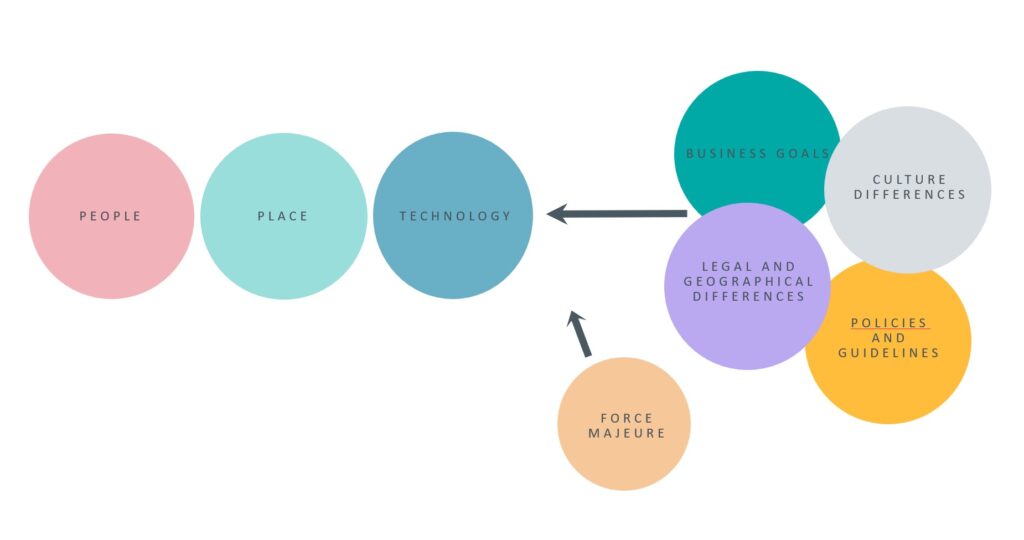
Key areas addressed in a Workplace Strategy
A Workplace Strategy should provide clear guidance and answers to critical questions, such as:
Hybrid / Flexible Work Models
How to support employees who work both onsite and remotely.
100% Onsite Work
Approaches for roles that require full-time presence at the workplace.
Remote Work
How to support employees working entirely from home.
Home Office Equipment
Standards, responsibilities, and recommendations for safe and productive remote work setups.
Leadership Guidance
Best practices for leading hybrid and remote teams effectively.
Compliance with Local Laws and Regulations
Understanding legal responsibilities related to remote/hybrid work and home office arrangements.
Workplace Expectations
What employees can expect
By addressing these elements, the Workplace Strategy becomes a blueprint for creating vibrant, efficient, and adaptable workplaces that support organizational goals and enhance the employee experience.

photo: www.jannicahoney.com